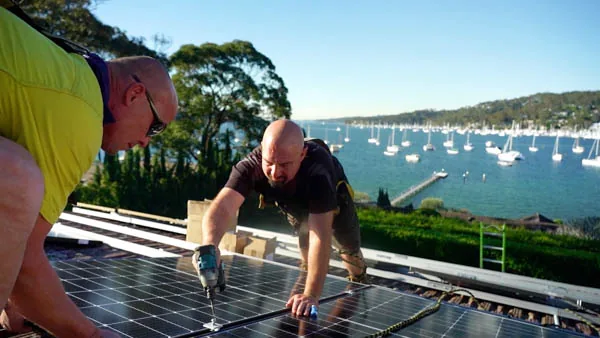
Solar photovoltaic (PV) panels are a renewable energy technology that converts free sunshine into clean electricity. And in a sunny market like Australia, going solar is a no-brainer for many homeowners and businesses.
However, solar PV panels:
- Don’t work as well on cloudy, overcast days.
- Don’t work at all once the sun goes down.
So how do solar customers enjoy 24/7 electricity access during these times?
There are really 2 main options – solar batteries and feed-in tariffs .
Solar Batteries at a Glance
On-site solar batteries allow you to store the daytime electricity from your PV panels for nighttime use.
This approach is normally used for rural properties that are too far from the Grid. But even in cities, installing solar batteries offers true energy independence – provided you have enough production and storage capacity installed.
How Feed-in Tariffs Work
A feed-in tariff (FiT) is a special incentive that allows you to “feed” surplus solar electricity to the Grid – in exchange for utility credits. Depending on which FiT you’re enrolled in, the credits generated can be as high as $0.20/kilowatt-hour, which is quite generous.
The FiT essentially allows you to monetise the sunshine hitting your roof. And because your PV installation is grid – tied with a bidirectional meter, the entire utility network acts as virtual storage for your solar panels:
- During the day, your utility meter logs any solar electricity that you feed into the Grid. And you accumulate credits.
- At night and on cloudy days, the meter logs any power taken from the Grid. And you rack up usage charges.
At the end of every billing cycle, you only pay for the “net” difference in electricity bought and sold. As such, it’s technically possible to receive negative utility bills (which many of our customers do).
However, there is a third option that combines the best of what batteries and the FiT offer. And in Australia, this approach is quickly picking up steam.
Making the Case for Solar Batteries AND Feed-in Tariffs
A growing number of residential solar customers are now combining solar batteries with the feed-in tariff. This approach is not truly mainstream yet – given the relatively high cost of installing batteries. However, combining both together does offer important benefits.
With on-site batteries, you can better time when you feed solar electricity into the Grid – allowing you to:
- Avoid peak demand charges and time-of-use (ToU) price hikes.
- Receive the highest rates when feeding power into the Grid.
In addition, this approach makes the entire Grid greener since you’re able to send clean solar electricity into the network – even when the sun is down. Not only does this help shrink the community’s carbon footprint, but it also resolves solar power intermittency by smoothing out peaks and valleys.
Which Approach Is Best: Solar Batteries, Feed-in Tariffs, or Both?
Every homeowner comes to the table with slightly different goals, budgets, and expectations. And which option to choose ultimately depends on your needs – since each of the above strategies carries their own pros and cons.
Related reading