Speak with us
(02) 9984 9929
< Back

Cheaper Home Batteries Federal Rebate — What Actually Changed on 1 May 2026

May 13, 2026
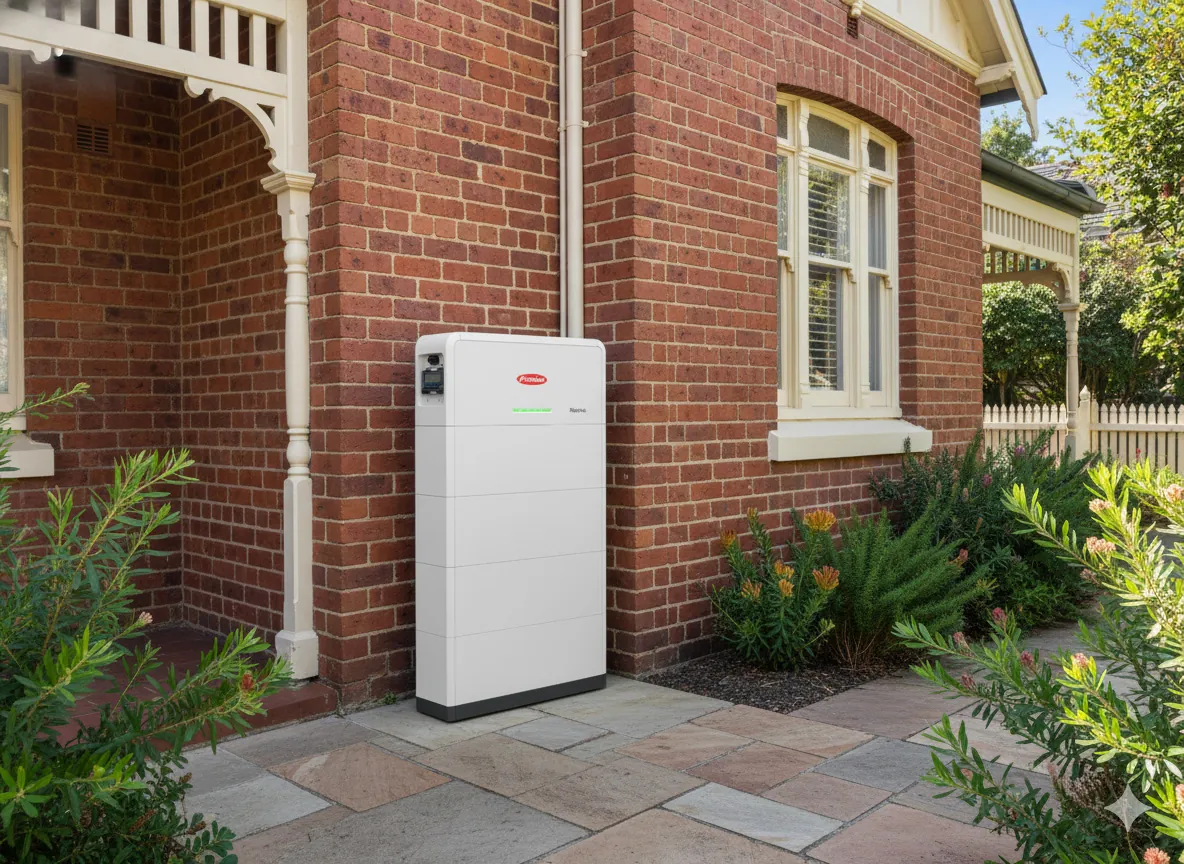
Fronius Reserva home battery installed against the brick wall of a federation-style home
On this page
The "rebate cliff" headlines were misleading. For a typical 13.5–16 kWh home battery the federal rebate didn't change drastically — but the underlying STC factor did move. Here's the post-1-May numbers.

The federal rebate didn't die on 1 May 2026. The Cheaper Home Batteries Program (CHBP) moved from a single flat rate to a three-tier STC structure that still meaningfully discounts batteries at every residential size, just sized differently as the program has matured:

‌

  • 0–14 kWh: 100% STC factor (the full rate)
  • 14–28 kWh: 60% STC factor
  • 28–50 kWh: 15% STC factor

What changed on 1 May 2026

Before 1 May 2026: STC factor of 8.4 applied at 100% on the full battery capacity up to about 50 kWh — roughly $311 in-pocket per kWh.

‌

Since 1 May 2026: STC factor dropped to 6.8 on the first tier, with the per-kWh in-pocket value moving to:

‌

  • 0–14 kWh: $252 per kWh
  • 14–28 kWh: $151 per kWh
  • 28–50 kWh: $38 per kWh

Federal rebate, pre- and post-1-May

Federal battery rebate, pre- and post-1-May$0$2,000$4,000$6,000$8,000$10,000$12,000$14,000$16,000513.5243248Battery capacity (kWh)Federal rebate ($)based on $37/BSTC (May 2026)$4,180$7,430$9,910$14,910$3,360$5,030$5,770$6,360Pre-1-MayPost-1-May

A 13.5 kWh Powerwall 3 still claims a meaningful federal rebate — about $800 less than April but the structure for that size is intact. Larger SigenStor builds take a bigger hit: at 48 kWh the rebate roughly halves vs pre-1-May.

Why the change

In response to the program's overwhelming take-up in its first months — particularly the surprise volume of very large (20+ kWh) installs — the tiered structure was introduced to concentrate support on smaller-scale systems and align with falling battery costs.

Eligibility and how to claim

  • Battery must be between 5 kWh and 100 kWh nominal capacity (only the first 50 kWh attracts STCs)
  • Battery on the Clean Energy Regulator's approved product list
  • Installed by an SAA-accredited installer
  • Open to homeowners, small businesses and community organisations — no income cap, no residency requirement
  • Discount applied at the point of install via BSTCs (Battery STCs) — appears on your quote, not as a post-install reimbursement

Solarbank is a solar and battery installer based in Chatswood — NETCC Approved Seller, SAA Accredited, Tesla Certified Premium Installer, Fronius Solutions Partner and Sigenergy Silver Installer.

Related reading

Related articles

Related posts

Red electric car plugged into a white Tesla Wall Connector on a garage wall at dusk
Guides
How to choose a home EV charger that suits your car and works with your solar and battery, from charging speed to how much extra solar you need.
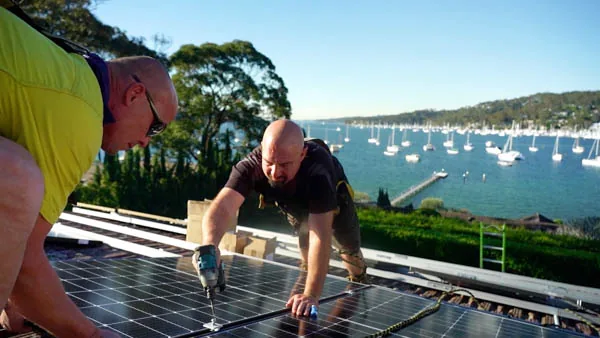
Two Solarbank installers fixing black solar panels to a tiled roof overlooking a Sydney waterway
Guides
Solar installer accreditation moved to SAA in 2024. Check three things before you sign: SAA installer, NETCC Approved Seller and CEC-approved products.
Aerial view of all-black solar panels on a metal roof with skylights
Guides
From first call to switch-on: how Solarbank designs, quotes and installs your Sydney solar and battery system, plus the support that carries on after.
get in touch

Ready to make the smart switch with us?

0 of 1000 max characters
Thank you! Your submission has been received!
Oops! Something went wrong while submitting the form.

Explore Topics

Thank you! Your submission has been received!
Oops! Something went wrong while submitting the form.
Sort by |
0
Results
Sort by |
Category
Guides
All Topics
Solar panels are sold online, in hardware stores and by installers. Why the best choice depends on your home and climate, and should follow a site assessment.
Jul 25, 2019
Solar Energy
Residential
All Topics
Solar panels make DC power but your home runs on AC. What a solar inverter does, what to look for, and why Fronius and SMA are long-standing favourites.
May 31, 2019
Solar Energy
Guides
All Topics
In our last post, we covered the rise of Solar Cowboys – i.e. unlicensed or low-quality installers attracted by easy profits. This trend is made possible by Australia’s lack of regulatory oversight. There simply aren’t many legal requirements to become a photovoltaic (PV) installer.
May 28, 2019
Solar Energy
Policy
All Topics
In Australia, there’s lots of sun, and it’s free to harvest, meaning anyone can install photovoltaic (PV) panels and generate their own free electricity.
May 06, 2019
Solar Energy
Residential
All Topics
Beyond lower bills, commercial solar can keep daytime power on in a blackout, cut cooling costs and lift property value. Three hidden benefits for businesses.
May 02, 2019
Solar Energy
Policy
All Topics
Solar pays off faster for businesses than homes: bigger daytime savings, tax deductions and a greener reputation that wins customers. Here's why it works.
Apr 15, 2019